CX has been shortlisted in the IEA Brexit prize

We are delighted to announce that our submission for the IEA's Brexit prize has been shortlisted by their judging panel and will now proceed to the final stage. Commenting on the announcement, Ralph Buckle, Co-founder of CX and co-author of the submission, said:

It's a great honour to be shortlisted by such a distinguished panel and we're looking forward to the next stage of the competition. No matter who wins, it's vital that this conversation takes place in the UK to inform the debate around a possible future referendum and ensure all options and implications are considered if the public do vote to leave

You can read more about the prize here but the premise is as follows:

A referendum has resulted in an “Out” vote and Her Majesty’s Government has triggered Article 50 of the Lisbon Treaty. What measures does the UK need to take in the following two years, domestically (within the UK), vis-a-vis the remaining EU and internationally, in order to promote a free and prosperous economy?

CX does not take a position on whether the UK should remain in the EU but feel it is important that plans are in place should it chose freely to do so. As a result we put forward our submission arguing that the Commonwealth and wider Anglosphere should be at the forefront of any UK plans if it were to leave the union. As the competition is still going on we obviously don't want to reveal more at this stage.

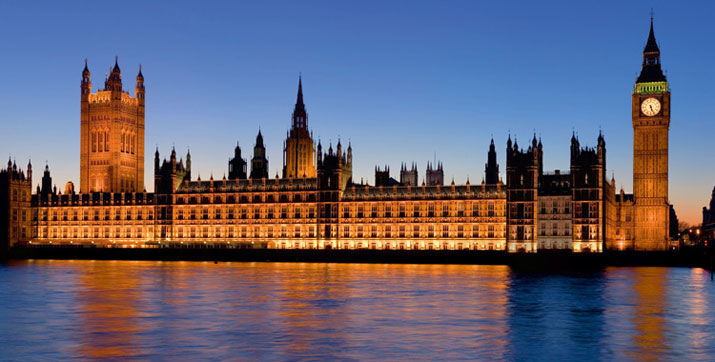
However we would also like to stress that the UK needs to engage and build stronger links with the Commonwealth nations whether or not it remains a member of the EU. If the UK does remain a member or until it leaves, it should be constantly pushing for trade and bilateral investment agreements with Commonwealth countries as our Advisory Board member, Robin Walker MP, made clear in Parliament this week to the Prime Minister.

Update: the full shortlist is now available here.
High Commissioner to India: Britain makes wonderful things

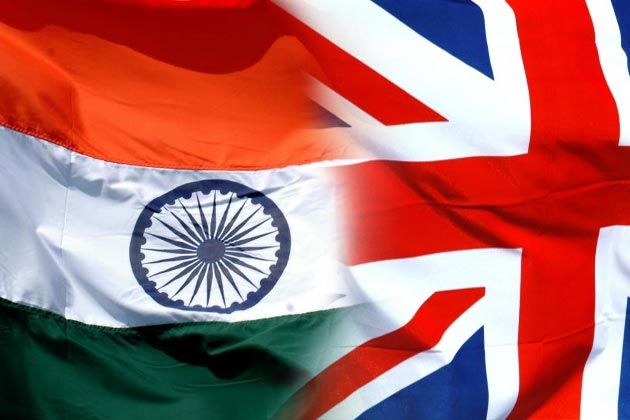
Britain and IndiaAs CX supporters on Facebook will be aware, we are consistently impressed with Sir James Bevan KCMG, the British High Commissioner to India. If nothing else, his endless optimism for Britain, India, the Commonwealth and the World is both infectious and inspiring. He has, once again, given an excellent speech promoting British business to India and vice versa, on this occasion to promote this Sunday's Indian Grand Prix . It can be read in full here. He uses the opportunity to heap praise on some of the great British-Indian success stories including JCB changing the landscape of India and Tata, through Jaguar Landrover, changing the roads of Britain and the world.

In his closing remarks he channels "Love Actually" with a resounding and optimistic assessment of Britain's economic past and it's future. A future that relies on us reaching out to the world. Enjoy:

We in Britain are good at thinking up new things as well as making them. The UK is one of the most innovative countries in the world. Examples – the Internet, invented by a Brit; the iPad, designed by a Brit; and the Higgs Boson, the particle which explains why the physical world works, predicted by a Brit.

Other things which the British have discovered or invented include, in no particular order: football, golf, cricket, tiddlywinks, croquet, the pencil, the telephone, SMS messaging, the light bulb, television, railways, the steam engine, the jet engine, hovercraft, penicillin, gravity, radar, longitude, vertical take-off aircraft, evolution, bungee jumping and the postage stamp. And - perhaps the most important breakthrough of all for world happiness, finally achieved in 1847 by the British company JS Fry and sons – the chocolate bar. Not a bad list for a small misty island off the coast of Europe.

So, ladies and gentlemen, if you remember one thing from this evening – apart from Jenson Button – remember this: Britain makes things. And the things that we make are wonderful.

CX Campaign for WW1 Commonwealth Memorial welcomed in Parliament

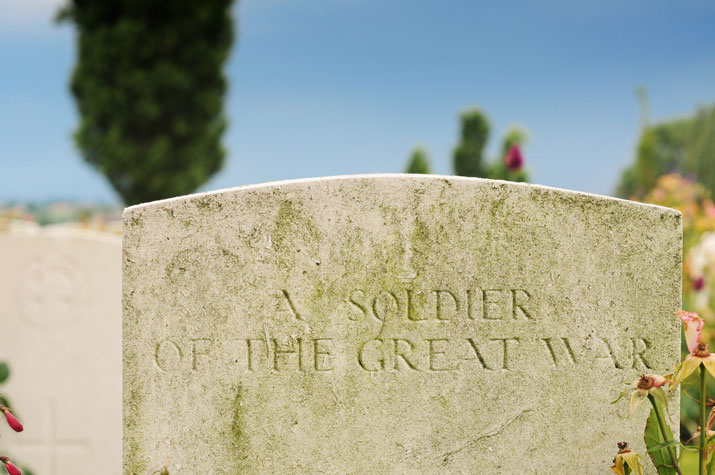
Pay your respects to the fallen Commonwealth soldiers during the centenary of WW1Commonwealth Exchange's campaign for a memorial to recognise the collective sacrifice of the Commonwealth fallen in the First World War has been welcomed in Parliament. Andrew Rosindell MP, a member of CX's Advisory Board, has tabled an Early Day Motion (EDM) in support of our campaign.

It has so far received cross party support from 23 MPs. We've listed them below. If your MP hasn't signed it yet then encourage them to do so! You can find your MP and their contact details by putting your postcode in here.

It states:

That this House welcomes and supports a new public campaign to recognise the collective sacrifice of the Commonwealth fallen in the First World War through a standalone and distinctive memorial statue in London created and organised by Commonwealth Exchange to mark the centenary of that war, which acknowledges and honours the diverse make-up of the Commonwealth and the UK; and further supports the Government's plans to forge a legacy that demonstrates this Commonwealth endeavour from those of differing extractions, faiths and traditions.

Signatories:

  • Paul Flynn (Labour)
  • John Hemming (Lib Dem)
  • Lady Hermon (Independent)
  • Hugh Bayley (Labour)
  • Dr William McCrea (DUP)
  • David Ward (Lib Dem)
  • John Leech (Lib Dem)
  • David Simpson (DUP)
  • Bob Blackman (Conservative)
  • Paul Murphy (Labour)
  • Martin Caton (Labour)
  • George Howarth (Labour)
  • Naomi Long (Alliance)
  • Alan Meale (Labour)
  • Mike Hancock (Lib Dem)
  • Jim Dobbin (Labour)
  • Julian Lewis (Conservative)
  • John McDonnell (Labour)
  • Jim Shannon (DUP)
  • Andrew Stunell (Lib Dem)
  • Andrew Rosindell (Conservative)
  • Peter Bottomley (Conservative)
  • Bob Russell (Lib Dem)

Update:

Robin is Secretary of the Commonwealth All Party Group in Parliament and a member of CX's Advisory Board.

Canada leaping forwards in Commonwealth and Global Trade

There have been a couple of bits of good news from Canada in the last few days. First, John Baird, Canada’s Foreign Affairs Minister, wrote this op-ed on "Deepening Canadian Partnerships with ASEAN." In it he argues for further ties with the grouping includes Singapore and Malaysia pointing out that:

  • "Known Canadian foreign investment in this region reached $6.7 billion at the end of 2012"
  • "two-way trade has averaged around 5-percent growth in the past five years"
  • "This robust economic relationship has been mutually beneficial, helping to lift many out of poverty in ASEAN societies while creating a significant number of jobs here in Canada"

Then on Friday it was announced that negotiations for a Comprehensive Economic and Trade Agreement (CETA) between Canada and the EU have been concluded.

Progress here has been slow. Discussions of a deal have been going on on-and-off since 2004 and the deal is unlikely to be finally ratified for another two years, which will be more than 6 years after the Canada-EFTA deal came in to force.

However it is still welcome news and brings Canada together with three of its fellow Commonwealth member states (the UK, Cyprus and Malta) as well as the other EU countries.

Add in Canada's ongoing negotiations with India, Singapore and CARICOM (12 of the grouping’s 15 members are also Commonwealth members) it seems to be leading the way in Commonwealth Trade.

Lords debate the future of the Commonwealth

ParliamentYesterday the UK's House of Lords debated "The Future of the Commonwealth". Lord Luce, the former Governor of Gibraltar and Foreign Office Minister, introduced the debate and had encouraging words for CX's vision of a Commonwealth primarily focused on trade and the shared prosperity it can bring:

The combined GDP of the Commonwealth is more than £6 trillion and it contributes more than 20% of the world’s trade and investment. We have the advantage of common language and some regulatory frameworks which should facilitate trade. However, we could be doing far more in the Commonwealth. Growth rates in many African and Asian countries are improving. Trade opportunities are there to take.

He also made reference to the vast potential in the youth of the Commonwealth but also the risk of this being missed if young people aren't aware and engaged. This is a central plank of CX's activity and we will be announcing more very soon.

The important thing is the future. Fifty per cent of Commonwealth citizens are under the age of 25. The Commonwealth will mean something to them only if they have a knowledge and understanding of its value.

There were a number of encouraging contributions which can be watched here or read in full here but here are some of the highlights sharing our vision of the Commonwealth:

Lord Selsdon:

To me, the Commonwealth should be more about trade and less about politics

Baroness Scotland:

I, too, believe that if the Commonwealth did not exist, we would have to create it because it provides an opportunity for people of disparate beliefs, from different backgrounds and with different histories to come together...

The total gross domestic product of the Commonwealth is greater than that of the European Union and is predicted to grow by 7.3% between 2012 and 2017. Trade in goods within the Commonwealth is now worth about £250 billion each year to its members. There are huge positives to be gained from being a member of the Commonwealth... Within the Commonwealth itself, trade between other Commonwealth members is up by 50%.

Lord Chidgey:

In the governance of the Commonwealth, whether you are a small island nation, a huge landmass or a leading industrial nation, you have one thing in common—just one vote.

Lord Moynihan:

For it is a striking fact that even though the Commonwealth has its historical roots in the 19th century, it is perhaps one of the international organisations or platforms that is most suited to the world of the 21st

Lord Crisp:

In addition to the wealth of links that bind us all together, the Commonwealth is a truly remarkable organisation because it brings together rich countries, poor countries and fast-growing countries, and it is not geographically bounded.

Baroness Hooper:

The shared language, values, standards and heritage that bring the Commonwealth nations together need to be nurtured and future generations have to be helped to recognise that it is these factors that mark out the Commonwealth as a relevant and unique institution today which continues to evolve and change to meet new challenges.

Foreign and Commonwealth Office Minister Baroness Warsi in closing the debate:

There is great potential within the Commonwealth to promote the long-term prosperity of its members. The Commonwealth is a natural place for the UK and other member states to do business. Our shared principles of democracy, the rule of law and good governance, combined with our similar legal systems, provide a solid foundation for doing business—a platform for trade, investment, development and prosperity.